

Massage for Chronic Pain & Persistent Tension
When pain or tension keeps returning, the answer isn’t always more pressure, more stretching, or trying harder to make it go away. At New Age Bodywork, we take a slower approach working with your body rather than against it.
Maybe you’re tired of trying to fix your body.
You’ve stretched it.
Rolled it.
Strengthened it.
Had someone dig into it.
Tried to improve your posture.
Maybe you’ve been told you just need to relax.
And yet the tension returns.
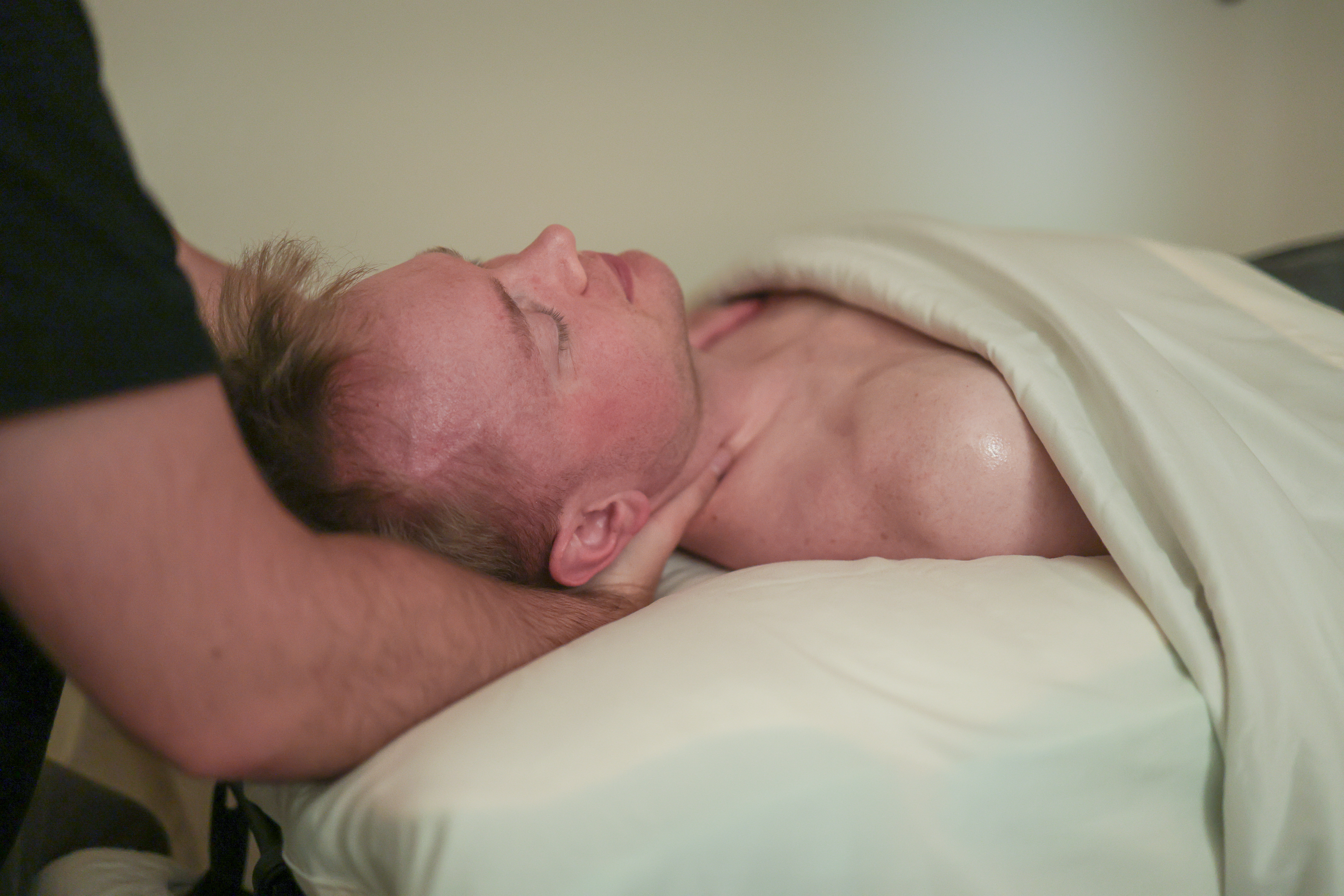
Persistent pain can be complicated. Rather than approaching your body as something that needs to be conquered, our work begins with curiosity: What is your body responding to, and what changes when we stop fighting it?
A different approach to therapeutic touch
Slow
We give the body time to respond rather than immediately forcing our way through resistance.
Responsive
Pressure, positioning, movement and techniques can change based on what your body is communicating during the session.
Whole Person
We recognize that pain and tension don't exist separately from stress, movement, sensation, environment and your lived experience.
Working with the body. Not against it.

What to expect
No two bodies are the same. Your massage shouldn’t be either.
Your session begins with a conversation about what you’re experiencing, not just where it hurts, but how the discomfort has been showing up in your life and what you hope to get from your time on the table.
From there, your massage is adapted to what your body needs that day. Sessions may incorporate therapeutic and deep tissue massage, myofascial techniques, sustained pressure, movement, cupping, gua sha, or other approaches when appropriate.
Rather than following a predetermined routine or forcing our way through areas of tension, we pay attention to how your body responds and adjust along the way.
Sometimes that means deeper pressure. Sometimes it means slowing down, using less pressure, changing position, or simply giving an area more time.
The goal isn't to make your body submit to the work. It is to create a space where we can listen to it together.
This approach may be a good fit if you experience:
Persistent neck and shoulder tension
Chronic back or hip discomfort
Recurring muscular tension
Headaches associated with muscle tension
Jaw/TMJ tension
A body that constantly feels tight or guarded
Stress that seems to show up physically
Temporary improvement from massage followed by the same tension returning
Frustration with aggressive or painful bodywork
Curiosity about the relationship between stress, sensation and physical tension
Pain doesn't happen in a vacuum
The sensations we experience in our bodies are influenced by more than muscles alone.
Stress, movement, sleep, attention, past experiences, environment, and the nervous system can all influence how we experience tension, discomfort, safety, and ease.
That doesn’t mean every tight muscle has an emotional meaning or that your pain is “all in your head.” And we won’t try to tell you what a sensation means.
Instead, our work creates space for curiosity.
What happens when you notice an area of tension without immediately trying to change it?
What does your body do when pressure feels safe rather than overwhelming?
Where do you feel yourself bracing, holding, softening, or letting go?
You are the expert on your own experience. Our role is not to interpret your body for you, but to help you slow down enough to notice what it may be communicating.
Sometimes changing our relationship with the body begins by simply listening to it.
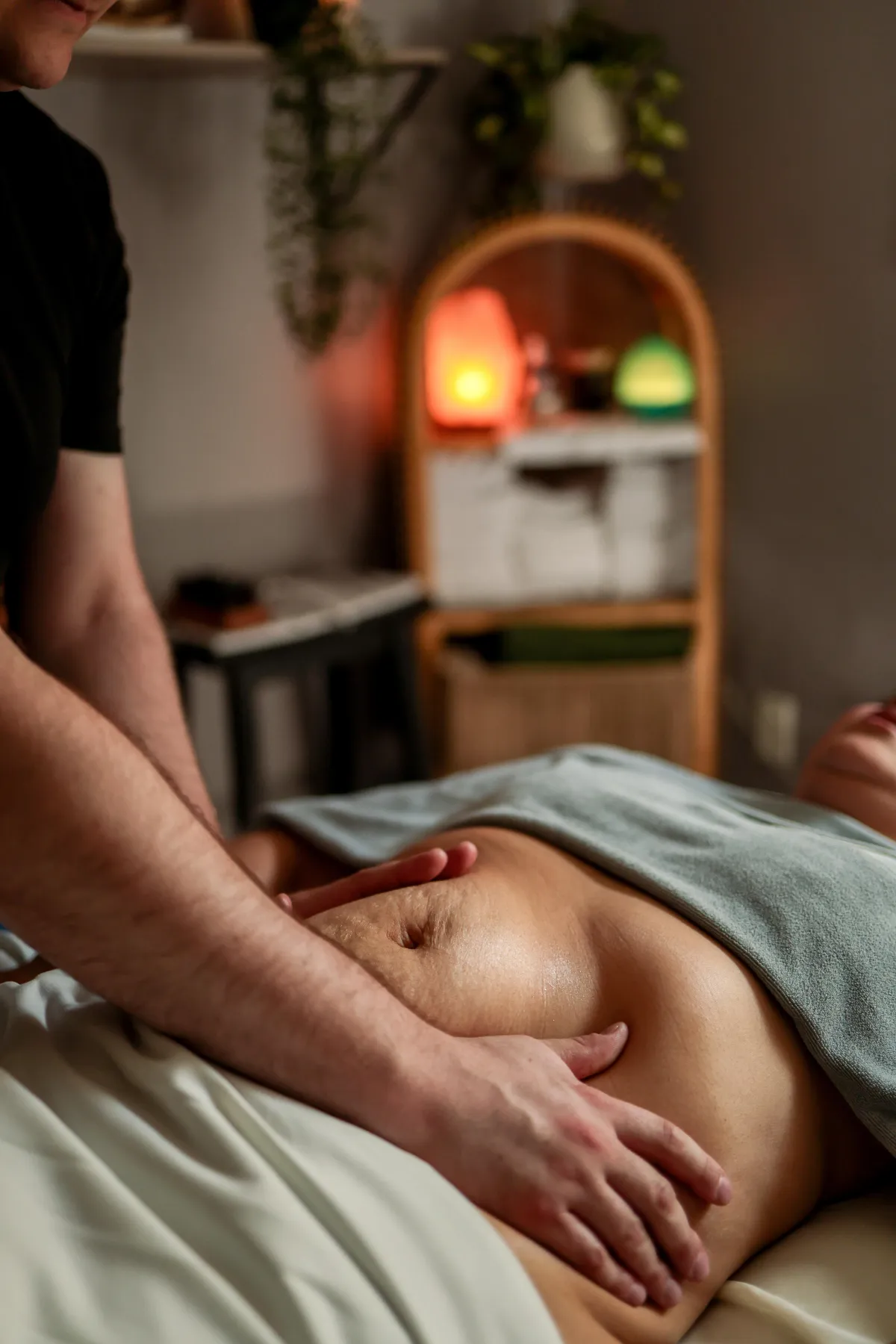
It Doesn't Have to Hurt to Heal.
When something hurts, it’s natural to want to get rid of it.
We stretch harder. Dig deeper. Push through. Roll it out. Try to loosen it, release it, fix it, or force it to change.
But your body isn’t something you have to defeat.
At New Age Bodywork, therapeutic massage can still be deep and focused, but intensity is never the goal for its own sake. We pay attention to how your body responds and use the amount of pressure that allows us to work effectively without turning the session into another fight.
Sometimes your body welcomes deeper work. Sometimes the most meaningful response happens when we slow down.
There is no prize for enduring the most pressure.
There is no need to prove that your pain is real by tolerating more pain.
And there is no battle to win against your body.
We work with the body. Not against it.
Behind the Healing
Welcome to New Age Bodywork! I’m TJ, a licensed massage therapist based in the heart of Millcreek, Utah. I specialize in fascia-focused bodywork like myofascial release and somatic therapies. Techniques that go beyond surface-level relief to address chronic tension and restore balance throughout the body.
My passion is helping clients feel safe, grounded, and free in their own skin. Every session is designed to support the connection between mind and body, creating space for both release and renewal.
Outside the treatment room, I share my life with my husband, two playful dogs, and one very curious cat. To me, wellness is more than what happens on the table—it’s about finding joy in everyday moments. I’d love to invite you on this journey of healing, where each session becomes an opportunity for rejuvenation and self-discovery.

Does chronic pain massage have to hurt?
No. Therapeutic work can be deep and focused without being painfully aggressive. Pressure is adjusted based on how your body responds throughout the session. Sometimes deeper work feels appropriate; other times slowing down or using less pressure can be more useful.
What if I don’t know what’s causing my pain?
That’s okay. You don’t need to have everything figured out before coming in. We can begin with what you’re experiencing now—where you feel discomfort, what seems to make it better or worse, and how your body responds during the session.
What if I’ve tried massage before and the tension always comes back?
You’re not alone. Rather than simply trying to make a tight area loosen up, we’ll explore the bigger picture and pay attention to how your body responds to different types of touch, pressure, movement, and pacing.
Do you offer deep tissue massage?
Yes. Deeper pressure can absolutely be incorporated when it feels appropriate and useful. Deep tissue doesn’t have to mean pushing through pain, though. The goal is effective therapeutic work, not using as much pressure as possible.
How often should I come in?
There isn’t one schedule that works for everyone. Your goals, symptoms, budget, and how your body responds to massage all matter. After your first session, we can discuss what frequency may make sense for you without requiring a long-term treatment plan.
You don't have to keep fighting your body.
If you're ready to explore a different relationship with pain and tension, your first session can simply begin with curiosity.
New Age Bodywork
Millcreek, Utah
Serving Salt Lake City and surrounding communities
By appointment only
© Copyright 2026. New Age Bodywork. All Rights Reserved.