What Safety in the Body Feels Like: Why Your Nervous System Matters More Than You Might Think
What Safety in the Body Feels Like: Why Your Nervous System Matters More Than You Might Think
Primary Keyword: What safety in the body feels like
Have you ever noticed that you can be lying on the couch at the end of a long day, yet your shoulders are still hovering near your ears?
Or maybe you've scheduled a massage because you're desperate to relax, only to realize halfway through the session that you're still holding your breath.
I've seen this countless times in my practice.
People often tell me, "I just can't seem to relax."
The interesting thing is that most of them aren't choosing to stay tense. Their bodies are simply doing what they believe they need to do.
That observation has changed the way I think about pain, tension, and massage therapy.
Instead of asking, "How do we get these muscles to let go?" I've started asking a different question:
"What would help this body feel safe enough to soften?"
That shift may sound simple, but it changes everything.
What Does Safety in the Body Actually Mean?
When I talk about feeling safe in your body, I'm not necessarily talking about being free from danger.
I'm talking about your nervous system recognizing that, in this moment, it doesn't have to stay on high alert.
Your nervous system is constantly gathering information from both inside and outside your body.
It notices your breathing.
Your posture.
The tone of someone's voice.
Whether you've been sleeping well.
How much stress you've been carrying.
Whether you're rushing from one obligation to the next.
It's always asking one basic question:
"Am I okay right now?"
Most of the time, this process happens completely outside of our awareness.
When your nervous system perceives safety, your body often has more capacity to rest, digest, move freely, and recover.
When it senses threat—whether that's physical pain, chronic stress, uncertainty, lack of sleep, or even feeling rushed—it may become more protective.
Sometimes that protection looks like muscle tension.
Sometimes it looks like shallow breathing.
Sometimes it feels like you're constantly "on."
Your body isn't trying to work against you.
It's trying to work for you.
The Body Protects Before It Relaxes
One of the biggest misconceptions I hear is that people think they should be able to force themselves to relax.
If you've ever told yourself:
"Just calm down."
You already know how well that usually works.
Imagine trying to convince a smoke alarm to stop ringing while smoke is still filling the room.
The alarm isn't trying to annoy you.
It's doing its job.
Now imagine a smoke alarm that's become a little overprotective.
Maybe someone burned toast, and suddenly it's screaming as if the house is on fire.
The alarm is still real.
The sound is still real.
But the level of danger may not match the intensity of the response.
Pain and tension can sometimes work in a similar way.
That doesn't mean pain is "all in your head." Pain is always real.
But research suggests that pain and muscle guarding are influenced by many factors, including previous injuries, stress, emotions, sleep, beliefs, movement habits, and your nervous system's assessment of safety.
The body is constantly adapting.
Sometimes those adaptations are incredibly helpful.
Sometimes they continue long after they're needed.
What Safety in the Body Feels Like
One question I love asking clients is:
"What does your body feel like when it actually feels safe?"
Most people pause.
Because it's not something we've been taught to notice.
There's no single answer, but many people describe experiences like:
Taking a full breath without realizing they had been holding it.
Feeling their shoulders naturally drop.
Unclenching their jaw.
Realizing their stomach feels softer.
Feeling heavier against the massage table instead of bracing.
Noticing their mind becoming quieter.
Feeling present instead of constantly planning the next thing.
These aren't signs that everything in life is perfect.
They're simply moments when your nervous system recognizes that it may not need to stay as guarded.
Safety isn't something you force.
It's something your body gradually recognizes.
Why Slowing Down Often Helps
One thing I've noticed over years of practicing massage therapy is that slower isn't just gentler.
It often gives the body time to respond.
Imagine someone walking into a dark room and immediately flipping on every light.
It's overwhelming.
Now imagine slowly turning up a dimmer switch.
Your eyes have time to adjust.
Your nervous system often appreciates that same gradual approach.
Whether we're talking about massage, movement, breathing, or learning body awareness, slowing down gives your system more opportunities to gather information.
Instead of reacting automatically, it has time to notice.
This is one reason my sessions often move more slowly than people expect.
I'm not trying to force change.
I'm trying to create the conditions where change becomes possible.
Sometimes the greatest shifts happen not because we used more pressure, but because the body stopped feeling like it had to defend itself.
You Don't Have to Earn Safety
I think many of us unknowingly believe we have to accomplish something before we're allowed to relax.
I'll relax after work.
After the dishes.
After the kids are asleep.
After I solve this problem.
After I finally get out of pain.
The finish line keeps moving.
But your nervous system isn't waiting for your to-do list to be complete.
Small moments of safety can happen throughout the day.
Not because you've earned them.
Simply because your body benefits from them.
Even taking thirty seconds to notice your breathing, feel your feet on the ground, or soften your jaw can give your nervous system new information.
Not every moment will create dramatic change.
That's okay.
Think of it like turning down the volume on a radio rather than flipping an on-and-off switch.
Recovery is often gradual.
A Small Experiment
Rather than trying to "fix" your body today, I'd like to invite you to become curious.
For just one minute, pause and ask yourself:
Where am I holding tension right now?
Can I notice it without judging it?
What happens if I take one slow breath?
Does anything change?
You don't have to make anything happen.
You're simply gathering information.
I often tell clients to approach their bodies like scientists rather than critics.
Scientists observe.
They stay curious.
They collect data without assuming they already know the answer.
Your body is giving you information all the time.
The goal isn't to control every sensation.
It's to become more familiar with what your body is communicating.
Coming Home to Your Body
One of the ideas I come back to again and again is that the body isn't asking us to fight harder.
More often, it's asking us to listen differently.
Safety doesn't mean you'll never experience stress, pain, or difficult emotions.
It means your body has moments where it no longer feels like it has to stay on guard.
Those moments matter.
They're often where healing begins.
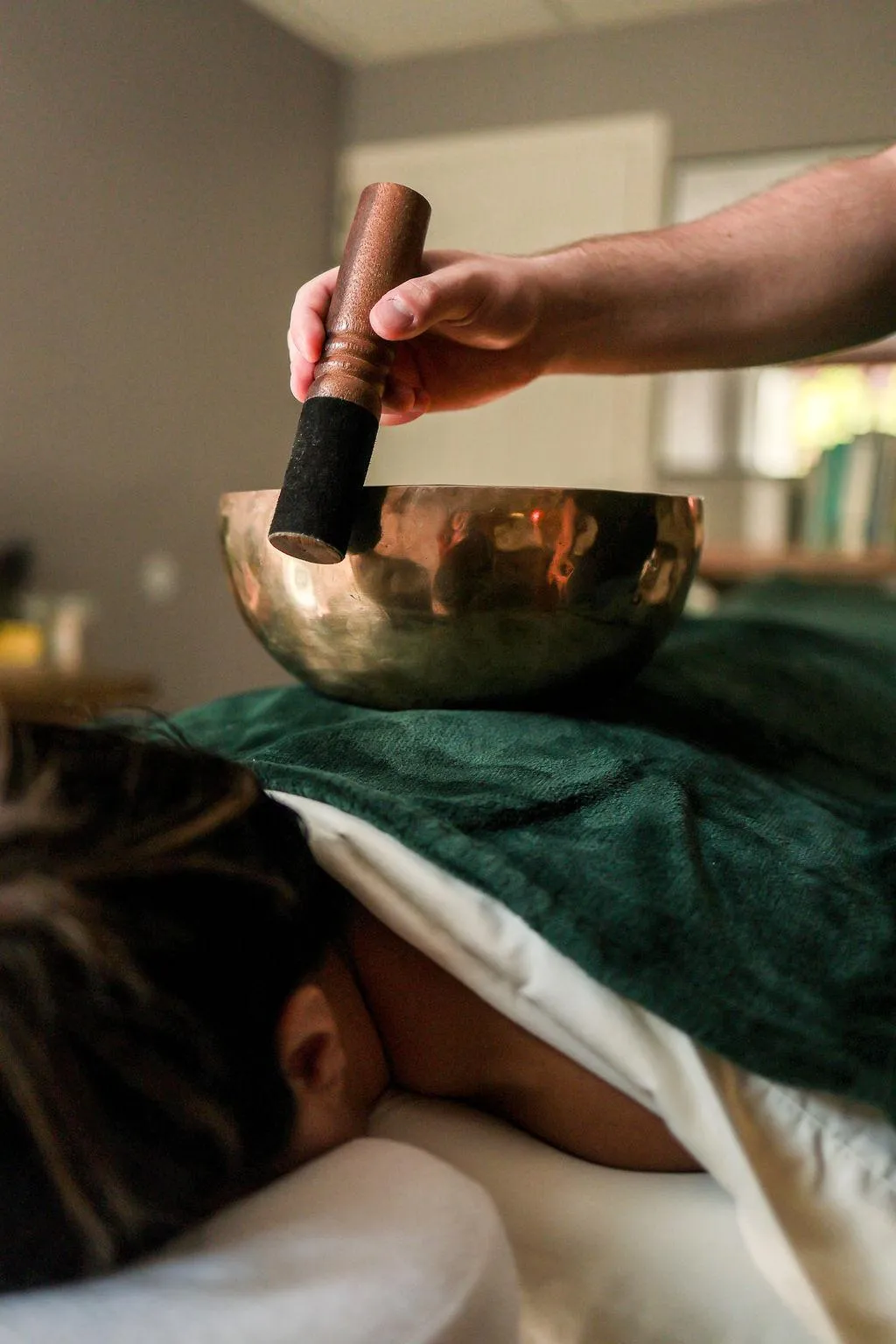
At New Age Bodywork, my goal isn't simply to reduce tension. It's to create a space where you feel heard, respected, and safe enough to explore what your body has been communicating all along. That philosophy guides every session, because meaningful change often begins when we stop trying to force the body to change and start working with it instead.
If you're living with chronic tension, recurring pain, or simply feel disconnected from your body, you don't have to figure it all out on your own.
You don't need to perform relaxation.
You don't need to be an expert in mindfulness.
You just need a place where your body has the opportunity to slow down, be listened to, and be met with curiosity instead of judgment.
Because sometimes the first step toward feeling better isn't doing more.
It's discovering what safety in your body feels like.
With Love,
~ TJ