Safety Isn't Something You Think. It's Something You Feel.
Safety Isn't Something You Think. It's Something You Feel.
Have you ever told yourself, "I know I'm safe," but your body didn't seem to get the message?
Maybe your shoulders stayed tense after a stressful meeting. Maybe your jaw kept clenching long after the difficult conversation ended. Or perhaps you finally sat down to relax, only to realize you couldn't.
It's a surprisingly common experience.
Many of us assume that feeling safe is something our mind decides. If we can logically explain why there's nothing to worry about, we expect our body to calm down.
But the body doesn't always work that way.
One of the most important observations I've made is this: safety isn't just something you think. Safetyis something you feel.
Your Body Is Always Gathering Information
Every moment of the day, your nervous system is taking in information from both your environment and your body. It's constantly asking questions like:
Am I safe here?
Do I need to stay alert?
Can I soften, or should I stay prepared?
Most of this happens outside of conscious awareness.
You don't have to remind yourself to blink or breathe. In the same way, you don't consciously decide whether your shoulders should tighten when you hear an unexpected loud noise. Your nervous system responds first, and your thinking mind catches up afterward.
This isn't a flaw. It's part of how we're designed to protect ourselves.
Thinking and Feeling Aren't Always the Same
Imagine standing on a sturdy glass bridge overlooking a canyon.
You may know the bridge is safe. You may trust the engineers who built it. You may even watch other people cross without hesitation.
And yet your heart races.
Your palms sweat.
Your legs feel shaky.
Your thoughts and your body aren't telling the same story.
The same thing can happen in everyday life.
You may know you're finally home after a long day, but your body still feels "on."
You may know you're lying on a comfortable massage table, yet notice yourself holding your breath.
You may know the stressful event has ended, but your muscles haven't received that message yet.
Safety isn't only an intellectual conclusion. It's an experience your nervous system gradually recognizes.
Why Tension Doesn't Always Go Away
Many people become frustrated because they believe they should be able to relax.
"I don't know why I'm so tense."
"I've already dealt with that."
"I just want my body to let go."
Those feelings are understandable.
But what if tension isn't simply something that's wrong with your body?
What if it's one of the ways your body has learned to protect you?
Our nervous system is incredibly adaptable. If it spends enough time responding to stress, uncertainty, pain, poor sleep, or repeated demands, staying slightly guarded may become familiar.
That doesn't mean you're broken.
It doesn't mean your body is working against you.
It may simply mean your body hasn't yet experienced enough signals that it's okay to soften.
Creating Conditions for Safety

One of my favorite analogies is thinking about a garden.
You can't make a plant grow by pulling on its leaves.
Instead, you create the conditions that support growth. Water. Sunlight. Healthy soil.
Our bodies often work in a similar way.
We can't force ourselves to feel safe.
But we can begin creating conditions that support that experience.
Sometimes that's slowing your breathing.
Sometimes it's taking a walk outside.
Sometimes it's having a conversation where you feel heard.
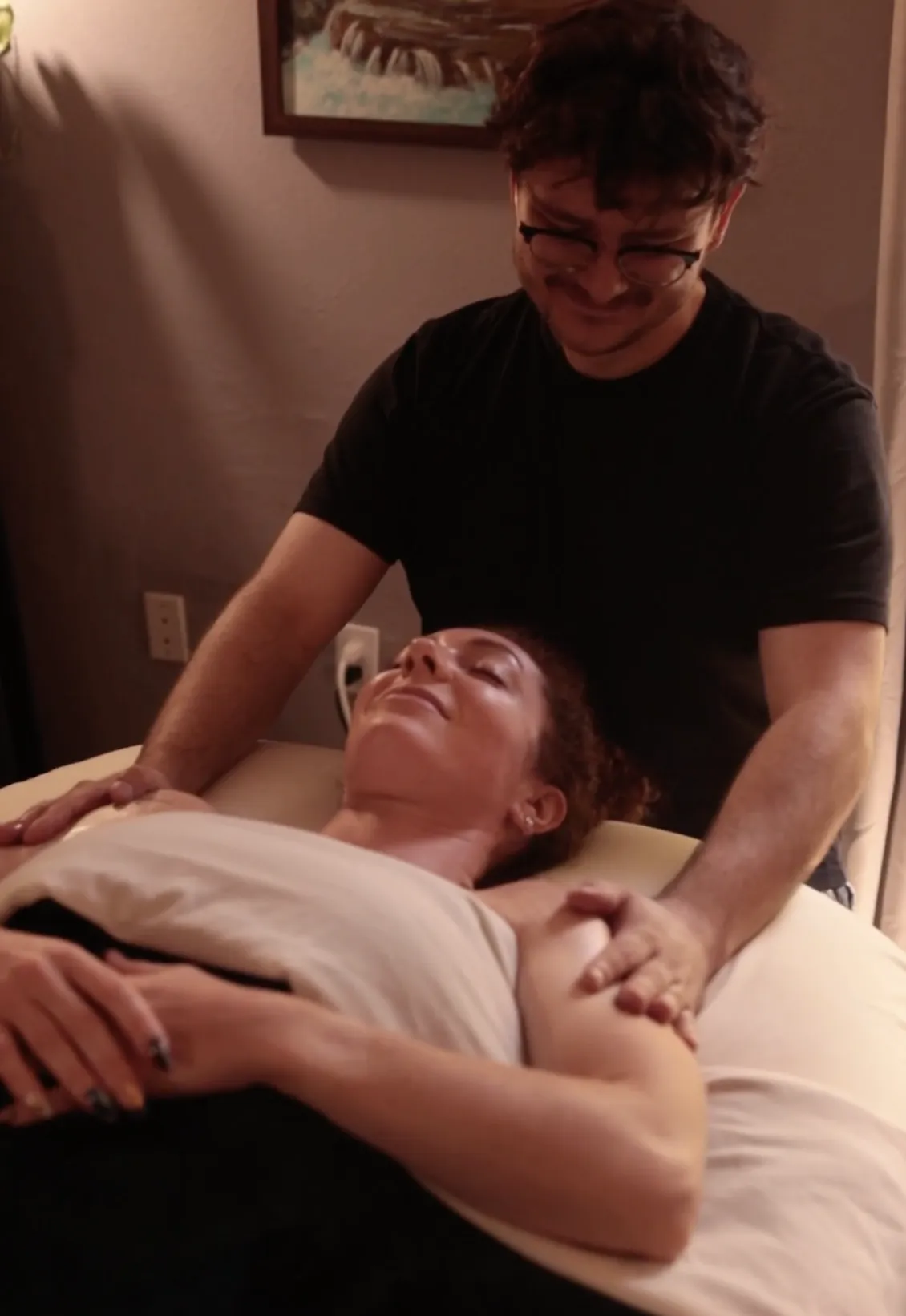
Sometimes it's receiving thoughtful, responsive touch during a massage session.
None of these guarantee a particular outcome. But each may provide your nervous system with information that says, "Maybe I don't have to work quite so hard right now."
Over time, those experiences can begin to add up.
A Different Way to Listen to Your Body
The next time you notice tension, try resisting the urge to immediately ask, "How do I fix this?"
Instead, become curious.
Ask yourself:
What am I noticing right now?
Does my body feel supported?
Have I felt rushed today?
When was the last time I truly felt at ease?
There aren't right or wrong answers.
You're simply gathering information.
Learning to notice your body's responses is a bit like learning a new language. At first, everything feels unfamiliar. But with patience and curiosity, patterns begin to emerge.
That awareness often becomes the first step toward meaningful change.
Feeling Safe Is a Practice
Many people spend years trying to convince their body to relax through willpower alone.
But the body isn't persuaded by arguments.
It's influenced by experience.
The more often your nervous system encounters moments of genuine support, connection, rest, and compassionate attention, the more opportunities it has to recognize that it may not need to stay on high alert all the time.
This process isn't about perfection.
It's not about eliminating every moment of stress.
It's about gradually helping your body experience what safety feels like.
Because safety isn't simply something you understand.
It's something your body learns.
If this idea resonates with you, therapeutic massage and nervous system focused bodywork may offer a supportive space to explore those patterns with curiosity. You don't have to force your body to change. Sometimes creating the right conditions is where change begins.