What Does Relaxation Actually Feel Like?
What Does Relaxation Actually Feel Like?
We talk about relaxation as though it should be easy.
Take a deep breath.
Unclench your jaw.
Drop your shoulders.
Just relax.
But what if your body doesn’t know what “relaxed” is supposed to feel like?
For many people, especially those who have spent a long time living with chronic stress, pain, tension, or overwhelm, relaxation isn’t something that happens simply because we tell ourselves to calm down. Sometimes, we have to get curious about it.
Relaxation Is More Than the Absence of Tension
When we imagine relaxation, we might picture a quiet beach, a warm bath, a massage table, or an evening with absolutely nothing on the calendar. Those things can certainly help us relax, but relaxation is also an internal experience.
It might feel like:
Your breath moving a little more freely.
Your shoulders becoming heavier.
Your thoughts slowing down.
Your jaw softening without you intentionally releasing it.
Feeling more present in the room around you.
A little less urgency to fix, accomplish, or anticipate something.
Feeling like you can simply exist for a moment.
And sometimes, relaxation is much subtler than that. It might just be noticing that you're holding 5% less tension than you were a few minutes ago. That still counts.
What If Relaxing Feels Uncomfortable?
This is something we don't talk about enough. Not everyone immediately feels good when they slow down. If your nervous system has become accustomed to being busy, vigilant, tense, or constantly prepared for what comes next, stillness can feel unfamiliar.
You might lie down to rest and suddenly notice how busy your thoughts are. You might become more aware of sensations in your body. You might feel restless. You might even find yourself thinking, I should be doing something.
That doesn't necessarily mean you're doing relaxation wrong. Instead of forcing yourself to relax, you can begin by simply noticing your experience.
What happens in my body when I slow down?
That question gives us somewhere much gentler to begin.
You Don't Have to Force Your Body to Relax
At New Age Bodywork, one of the ideas I return to again and again is:
It doesn't have to hurt to heal.
I think the same principle applies to nervous system regulation. We don't necessarily need to force the body into calm. We can create conditions that make calm a little more accessible.
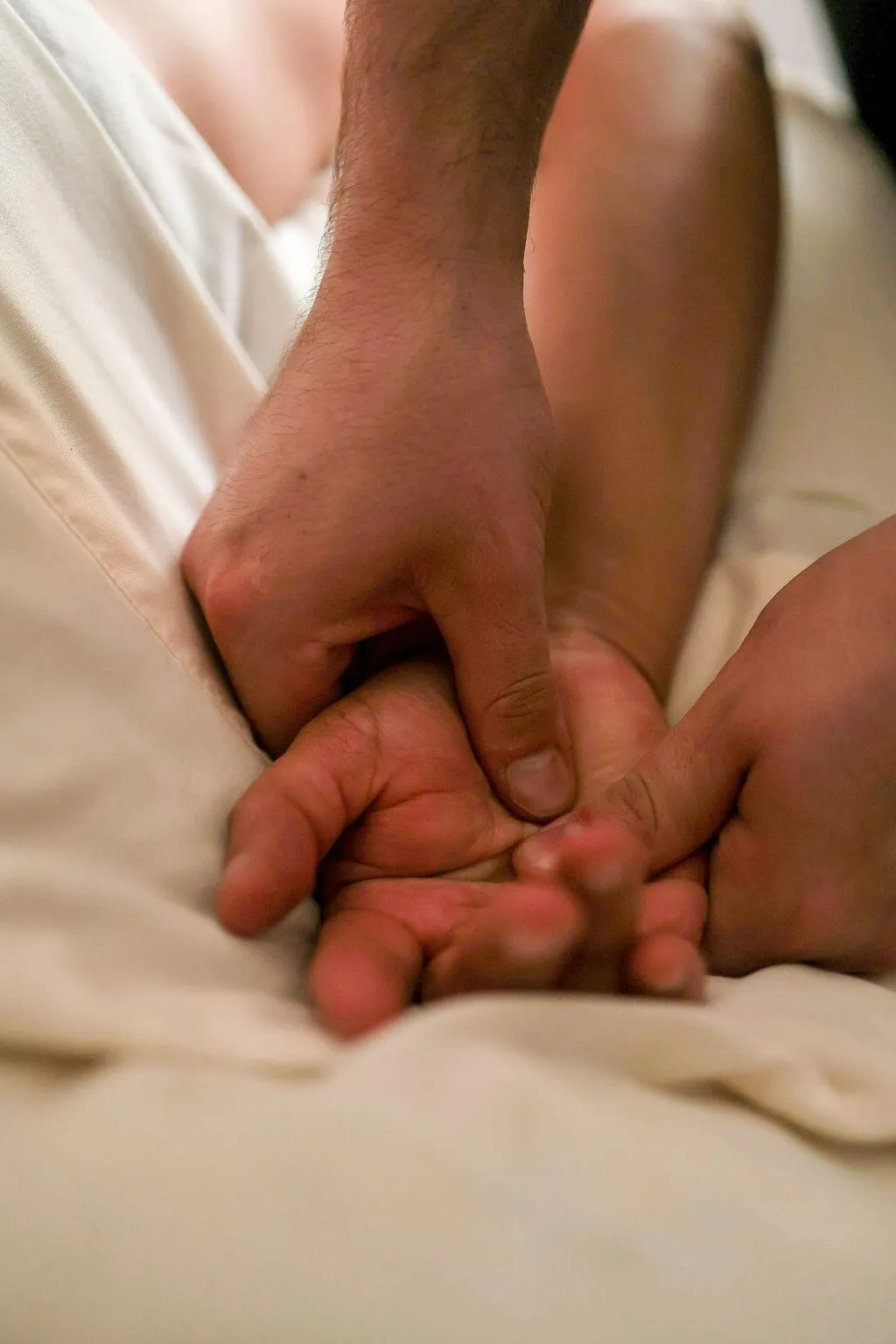
That might mean dimming the lights. Putting your phone down. Feeling the weight of your body against the chair beneath you. Listening to music. Taking a warm shower. Receiving slow, intentional touch. Spending a few minutes outside. Or simply noticing your breath without trying to change it.
Rather than commanding the body to relax, we can give it opportunities to discover what relaxation feels like.
Try This: Find 5% More Comfort
You don't need twenty minutes of meditation or a perfectly quiet room for this. Take a moment wherever you are. Notice how your body is positioned.
Then ask yourself:
Is there anything I could change right now that would make me 5% more comfortable?
Maybe you adjust your shoulders.
Maybe you uncross your legs.
Maybe you lean back.
Maybe you take off your shoes.
Maybe you take one slower breath.
Then notice what changed. Don't look for a dramatic transformation. Just notice.
What does 5% more comfortable feel like in my body?
This kind of curiosity can help us begin recognizing the small shifts that are easy to overlook when we're searching for a perfect state of calm.
Learning Your Own Language of Relaxation
Relaxation doesn't have to look the same for everyone. For one person, it might feel like stillness. For another, movement. It might feel warm and heavy, or light and spacious. It might mean silence, music, nature, touch, stretching, rocking, breathing, creating, or simply being alone for a few minutes.
The goal isn't to find the “right” way to relax. It's to become familiar with your signals of safety, comfort, and ease.
Because the more familiar those sensations become, the easier they may be to recognize when they appear.
So this week, instead of asking yourself:
How do I make myself relax?
Try asking:
What does relaxation feel like for me?
And see what your body has to say.